
Cab area – the front of the van where the driver and passenger sit.
Cargo area – the back of the van where the stuff being carried about is stored.
Bulkhead – the divider between the cab and cargo area. This can be solid sheet metal, partially glazed, metal mesh, wood and sometimes other lightweight materials. It’s there for safety, security and practicality such as warmth and noise reduction.
Van lengths and heights explained
Vans typically come in three main heights (H) and four main lengths (L) giving a range of combinations to suit as many purposes as possible. Firstly let’s cover lengths also known as wheelbase. It’s worth knowing that the length code of the van is for the relative length of the van i.e. short, medium, long or extra long and not a specific standard length across all manufacturers, makes and models. This means that a medium length Ford Transit and a medium length Mercedes Sprinter van will not necessarily be the same length.
Vans range from, Short Wheel Base (SWB) some people also call this a shorty and it is technically referred to as an L1 (Length One) the shortest possible van length you can buy. Medium Wheel Base (MWB) technically referred to as an L2 (Length Two) the second shortest van you can buy. Long Wheel Base (LWB) technically referred to as an L3 (Length Three) the third longest option of van you can buy. Last but not least the Extra Long Wheel Base (XLWB) technically referred to as L4 (Length Four). And now for height options – pretty straight forward (H1=Standard, H2=Medium Height, H3=High Top). It’s fairly common to see a van that’s a L1,H1 = Short Wheel Base, Standard Height Van as much as it is to see a L3, H3 van = Long Wheel Base, High Top. There are a range of combinations out there including L1,H3 & L2, H3 versions too.
There are pros and cons to each of these which we’ve attempted to summarise.
A shorter wheel base van is generally more manoeuvrable and has a better turning circle. It would therefore be more preferable as a daily driver on the off chance that you don’t have a separate car. A lower van would mean less accessibility restrictions for any where that has height restrictions meaning that you can still visit those much needed drive throughs and the many places with height restrictions that a higher van would not be able to access. It also means that you should be able to park easily in standard parking spaces. The higher the van the more restrictions there are. On the flip side the shorter the van the less space there is, and the less headroom there is. If you’re over 6ft (like me) you might want a taller van!
Our van is a medium height, medium wheelbase (L2, H2). We use the van regularly just because we love driving it. It makes us smile and the visibility is great.
Want a top tip? The first mod we made to the van was to add a reversing camera that is wired into the reversing light. We did this ourselves and it has made a huge difference to driving, reversing, manoeuvring and parking the van. We fitted the M1W wireless reversing camera from Auto Vox which we purchased from Amazon. Stating it’s wired then saying it’s wireless might be confusing so just to clarify it’s wireless from within the van from the transmitter in the back of the van to the LCD screen/unit in the cab. The unit is powered by splicing the unit into the reversing light, so every time you put the vehicle in reverse the camera is activated and not on permanently.
If you are interested in purchasing a reversing camera from Auto Vox visit their website or email them at service@auto-vox.com for a 25% off coupon!
And that’s it quick and simple van basics done. If you want to find out more about choosing the right (base) van for your build take a look at our blog post specifically about this.
Think that we should have covered or included something here that you didn’t find? let us know about it and we’ll review your request and potentially add it!
Thanks for taking the time to read our blog post!

Our Van (L2H2) 
L3H2 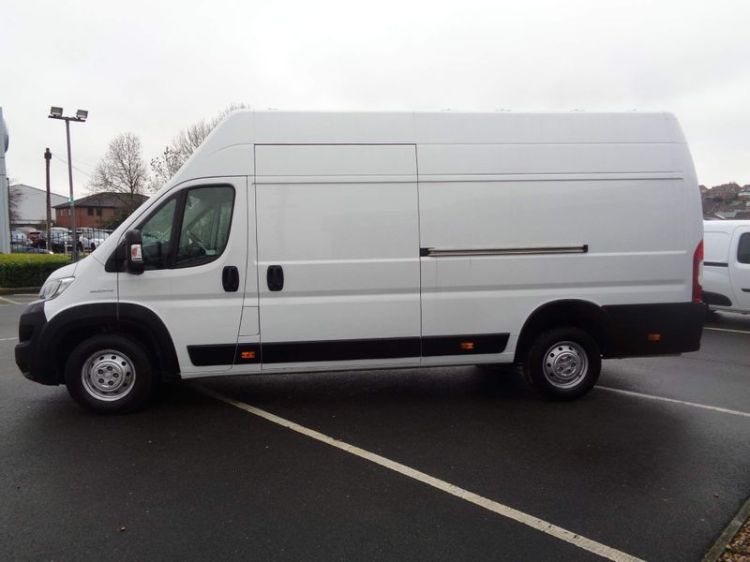
L3H3
 Adventure Campervans. Camper van information and products. Sheffield.
One thought on “Van basics”